
across the field, getting soft-robot simulations to match real prototypes is still an unsolved problem.
softcad
every soft robot you build should teach the model how to design the next one.
softcad is a calibrated design–build–test loop for soft robots. it links each specimen to how it was designed, made and measured, then uses that evidence to sharpen the model and plan the next build.
the problem: soft robots are still built by trial and error
design and manufacturing are still treated as separate steps, even though material, fabrication and function depend on each other.
reproducing results across labs is hard, and quality control for soft robots barely exists.
from actuator to robot
- component
actuators and chambers, calibrated on the bench
- module
arms and fingers, predicted from calibrated parts
- robot
grippers and swimmers, judged on the task
the product: one loop, from target to next build
today in the prototype · in development · vision
- 01 / target
describe
bend, force, reach or buoyancy
today
pressure · payload · environment - 02 / design
design and simulate
geometry · chambers · revisions
today
structural prediction - 03 / make
prepare fabrication
molds · cores · fixtures
today
process settings - 04 / record
record what was built
material batch · cure · measured walls
today
linked to its exact revision - 05 / measure
test the specimen
bench protocol · response curves
in development
drift over cycles - 06 / learn
calibrate and explain
refit material and process parameters
in development
model error vs. fabrication variation - 07 / next
recommend
next design or process change
vision
or the test that teaches the most
the forward half of this loop already exists. the feedback half doesn’t.
together, open tools such as sofa, cushion and design-optimization toolboxes can take a parametric design through simulation and optimization, in some cases all the way to a mold. none of them is built to track what was actually made, what it measured, and why it differed from the prediction. design tools also often don’t account for how parts are made, such as print direction, residual stress and creep, which leaves designers to trial and error. softcad is designed to own that missing half and to work alongside the tools labs already use.
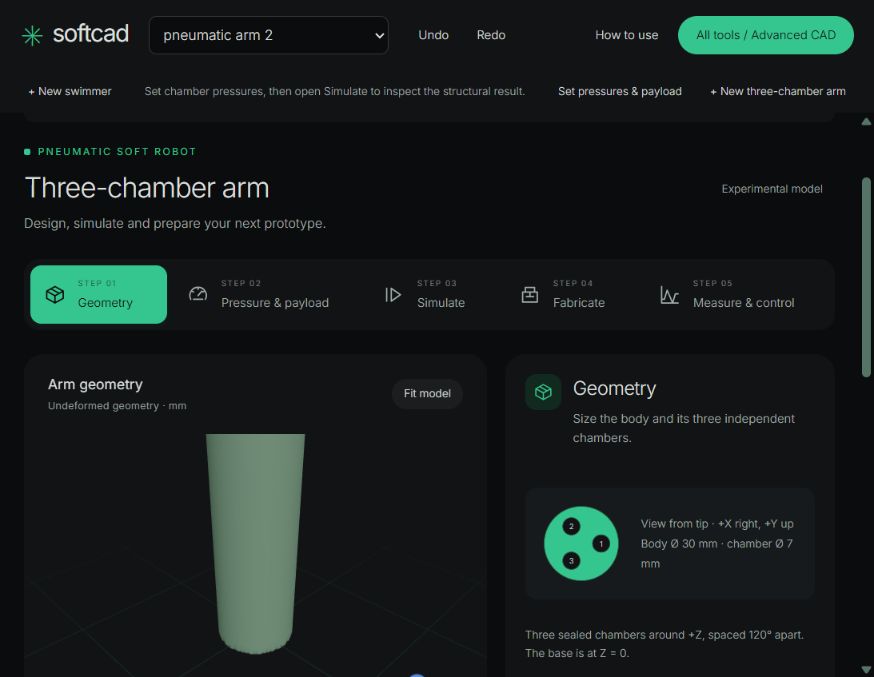
what works today
a guided workspace for a three-chamber pneumatic arm: geometry, chamber pressures and payload, structural prediction, mold and core export, material fitting, and specimen records tied to each revision.
join the research pilot
we’re looking for labs and small r&d teams who build and test soft actuators. bring a real project, ideally a multi-chamber pneumatic actuator, and help test whether a calibrated loop gets you to your target in fewer builds.